Wood Products Manufacturing & Technical Assistance Project (WPMTA)
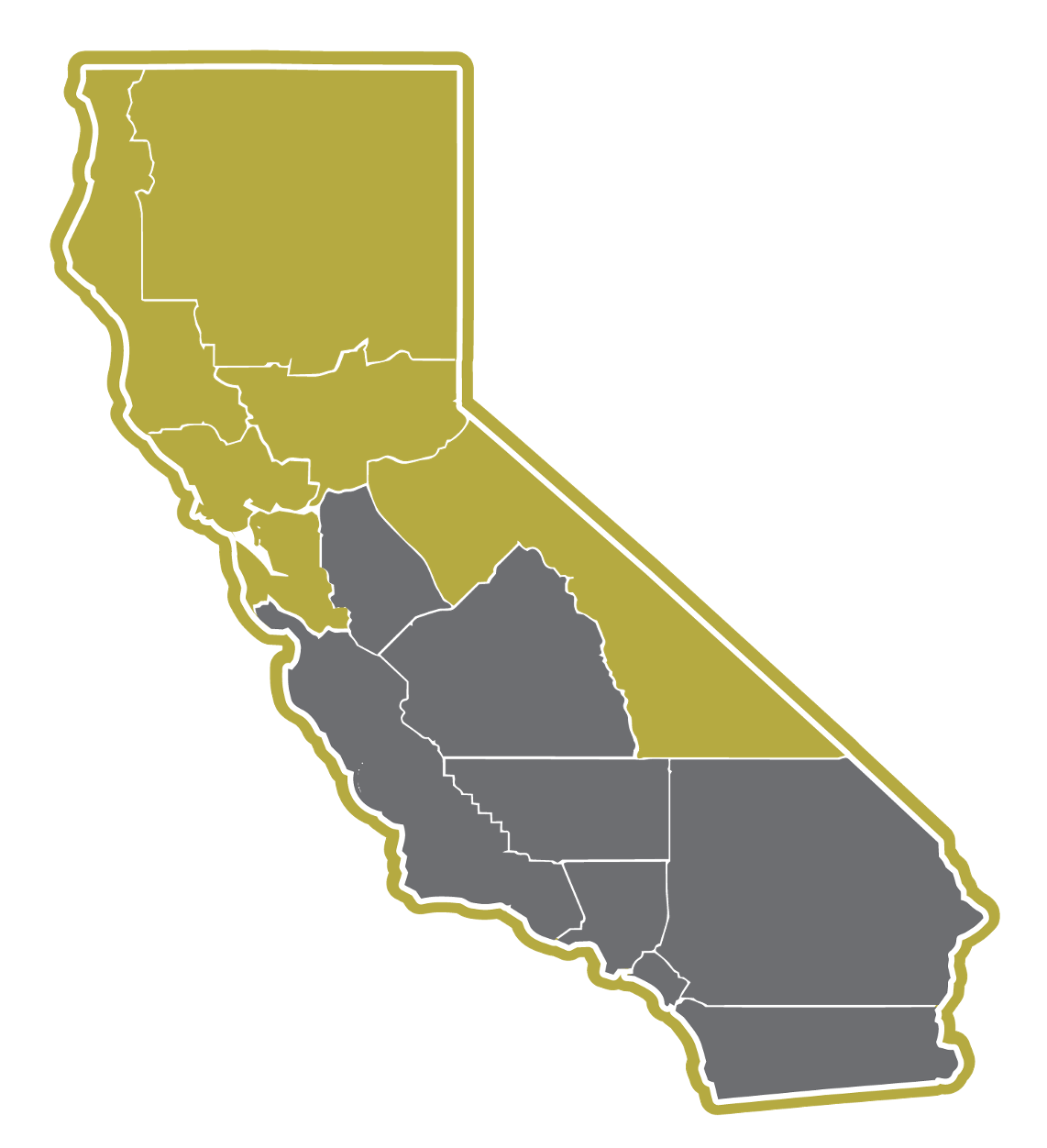
The WPMTA Project implements four (4) work streams to achieve impact across 55% of California’s forestlands.
1. Backbone support & development of the Northern California Wood Products Alliance
2. Equipment purchase, install, training and best practices
3. Support for communities through workforce training and job placement
4. Technical assistance for wood products businesses
THE WPMTA PROJECT IS A PARTNERSHIP BETWEEN THE FOLLOWING ORGANIZATIONS:


The WPMTA Project is a cross-regional initiative spanning five of California’s key economic development regions: the Bay Area, Redwood Coast, North State, Sierra, and Capital regions.
Together, these regions contain approximately 18 million acres of forestland, representing more than half of California’s forests. The stewardship of these forests is essential to advancing wildfire resilience while safeguarding biodiversity, water resources, air quality, and community health.
Despite their scale and importance, these predominantly rural regions have experienced decades of underinvestment in both forestry and wood products manufacturing. Today, this translates to a lack of infrastructure which remains a primary barrier to achieving the pace and scale of forest restoration that California requires.
WPMTA addresses this gap by rebuilding the state’s wood products manufacturing and support infrastructure through targeted technical assistance, workforce development, and strategic equipment investments.
By restoring this critical sector and providing coordination across regions, the WPMTA project enables the highest and best use of material generated through forest stewardship, reducing costs, supporting rural economies, and creating climate-smart wood products that store carbon and serve everyday needs.
The Opportunity
Improved Wildfire Resilience & Carbon Sequestration
1
California’s natural and working lands are among the most cost-effective resiliency solutions available, with carbon sequestration costs estimated at $11–$14 per ton through forests and other nature-based approaches compared to over $1,000 per ton for many engineered technologies.*
When proactively stewarded, forests not only store carbon, but also sustain biodiversity, safeguard water resources, reduce erosion, and improve air quality. This makes our forests essential infrastructure for resilience.
Jobs & Workforce Development
2
According to UCANR, California’s forestry and forest products sectors already support more than 81,000 jobs and generate $22 billion in annual economic activity annually. Yet this existing capacity falls far short of what is required to meet the state’s wildfire resilience goals.
To achieve mandated treatment targets, California must expand its wood processing infrastructure by approximately 95 percent while significantly growing its forestry and manufacturing workforce. Without this investment, the State will continue to generate millions of tons of underutilized material each year, limiting the effectiveness, affordability, and scalability of forest management.
Circular Economy Solutions for Working Lands Stewardship
3
California is the largest wood products market in the United States, and one of the largest globally, consuming more than 7 billion board feet of lumber annually. Yet the state remains heavily import-dependent, sourcing approximately 80% of its lumber and 90% of finished wood products from outside its borders (USFS, 2020).
This imbalance represents a critical market failure. Even thought California invests billions in wildfire resilience, the material generated through forest stewardship is largely underutilized.
With targeted in-state demand creation feasible through procurement standards, embodied carbon policies, and market incentives, California can realign its supply chain to support local wood processing, improve the economics of forest treatments, and scale restoration across its landscapes.
California has the market potential. What’s missing is the infrastructure and in-state procurement incentives to achieve it.
Development of the Wood Products Alliance
4
California currently lacks a centralized, cross-regional entity to coordinate investment, align stakeholders, and accelerate growth in the wood products sector, particularly across Northern California’s forested regions.
The Northern California Wood Products Alliance is being established to fill this gap. In partnership with regional leaders, the Alliance will serve as the sector’s backbone, delivering coordinated technical assistance, unlocking joint-funding opportunities, and building viable pathways for the sector.
By aligning resources and reducing fragmentation, the Alliance will accelerate project implementation, strengthen regional supply chains, and ensure that forest resilience translate into durable economic and workforce outcomes.